
The short answer
30-second summary- Workplaces in scope must keep food waste separate, however little they produce.
- Offices count. Tea bags, leftovers and staff lunches are food waste.
- Micro-firms have until 31 March 2027. For everyone else the rules already apply.
Tea bags, leftovers, fruit peelings and food brought in by staff all make food waste a normal part of office life.
Who needs a separate food waste collection?
Workplaces within scope of Simpler Recycling must keep food waste separate from dry recycling and residual waste. The requirement applies regardless of how little food waste is generated. Qualifying micro-firms have until 31 March 2027.
What can go into a food waste bin?
Your collector’s acceptance list is the final word, but this is the usual split.
- Plate scrapings
- Fruit and vegetable peelings
- Bread
- Meat and fish
- Dairy
- Packaging, unless your collector confirms it is accepted
- Compostable cups and takeaway containers
- Used cooking oil, which may need a separate service
- Caddy liners
Choose the right location and capacity
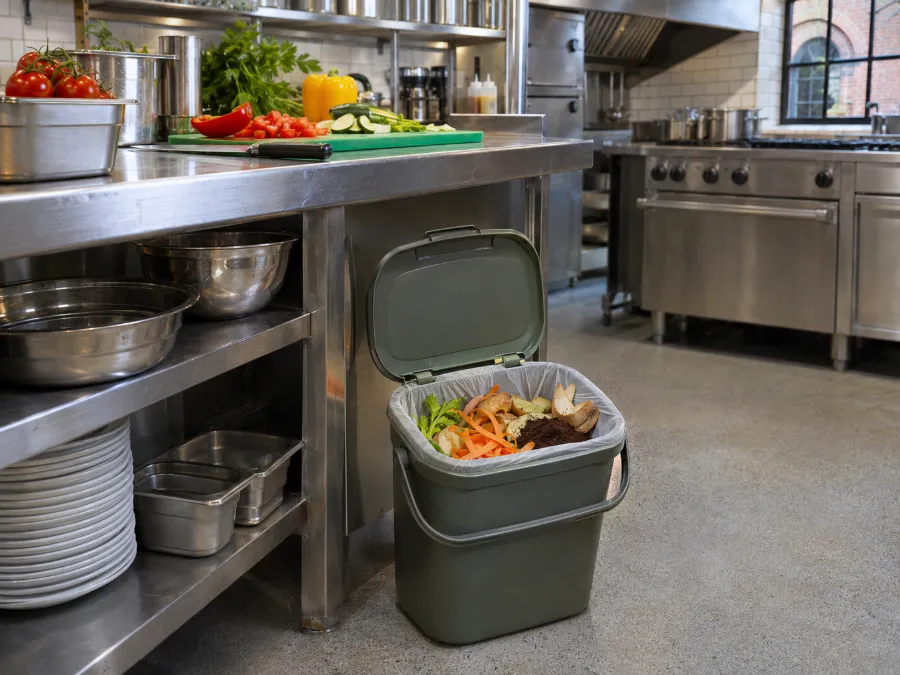
A small internal food caddy close to a staff kitchen may make separation much easier. Larger kitchens may need several caddies and a dedicated external container. The appropriate size and frequency depend on actual quantities, odour risk, space, access and the waste contractor’s service options.
Avoid the common mistakes
- Check with your collector which caddy liners it accepts.
- Give cleaners and catering contractors clear, simple instructions.
- Put food waste into dry mixed recycling.
- Put compostable cups or takeaway containers in the food bin.
- Ask employees to take food scraps home.
How to make food waste collection work
- Start with a clear acceptance list from your collector.
- Match the labels on internal caddies and external bins.
- Agree a collection schedule.
- Monitor the first few collections and adjust before overflow or contamination becomes routine.
Frequently asked questions
Does a small office need food waste collection?
Yes, once the workplace is in scope, even small quantities of food waste must be collected separately.
Can food waste go in a general waste bin?
Not as the normal arrangement for an in-scope workplace under Simpler Recycling.
Are compostable liners always allowed?
No. Ask the collection provider which liners, if any, are accepted. Compostable packaging should be kept out of food waste.
Does a business have to collect food waste every week?
There is no fixed weekly rule for workplaces, and frequency can reflect how much you produce. Government guidance recommends weekly or fortnightly collections and advises against storing food waste for more than two weeks.
This guide is general information for businesses in England. It is not legal advice.
Keep reading
All Simpler Recycling guides →How can we help?
Kenny Waste Management can discuss food waste collection options alongside your other business waste streams, helping you establish a workable system for the premises rather than an isolated extra bin.
- Tell us about your site
Five quick steps in the form. - We talk it through
Your waste streams, bins and collection days. - You get your quote
Based on the service your site needs.
Prefer to talk? 0161 790 3737


