
The rules in plain English
Since 31 March 2025, workplaces in England must separate recyclable materials and food waste from general waste before collection. That includes waste from staff, customers and visitors.
Simpler Recycling is led by the Department for Environment, Food and Rural Affairs (Defra). It aims to standardise recycling collections and boost recycling rates in England, and covers the household-like waste a workplace produces.
- What changed, and the two dates that matter
- Whether everything really needs its own bin
- How to assess your own workplace
- How the Environment Agency oversees the rules
What needs separating
There is no universal three-bin rule. These four streams are the starting point; your collector confirms what goes in each container.
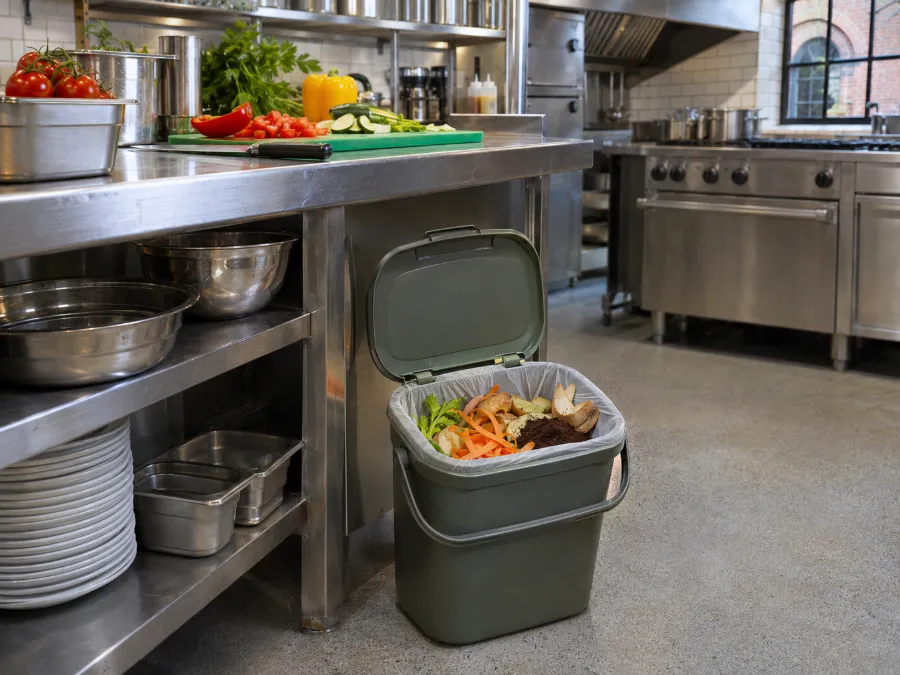
Food waste
Kept separate, however little you produce. Tea bags and staff lunches count.
For example: fruit and vegetables, meat and fish, dairy, tea bags Food waste guide →Paper and card
Normally collected apart from other recycling, unless a written assessment covers the service.
For example: magazines, office paper, boxes, corrugated cardboard Paper and card guide →Plastic, metal and glass
Can go together as dry mixed recycling where the service accepts them.
For example: bottles, tubs and trays; tins, cans and foil; glass bottles and jars Dry mixed recycling guide →General waste
Whatever is left once the recyclable streams have been separated.
For example: non-recyclable black bag waste How many bins do I need? →Paper in one bin, cardboard in another? It depends on your collection service and where the material is recycled. We will confirm the setup for your site.
Ask about your site →Produce a lot of glass? Glass can go in with mixed recycling, but a separate glass container is often the better option for pubs, restaurants and other sites with high volumes.
Guides by question
Not sure what your site needs?
Tell us what you throw away and how your collections work now. We will talk through the practical options.
Guides for your sector
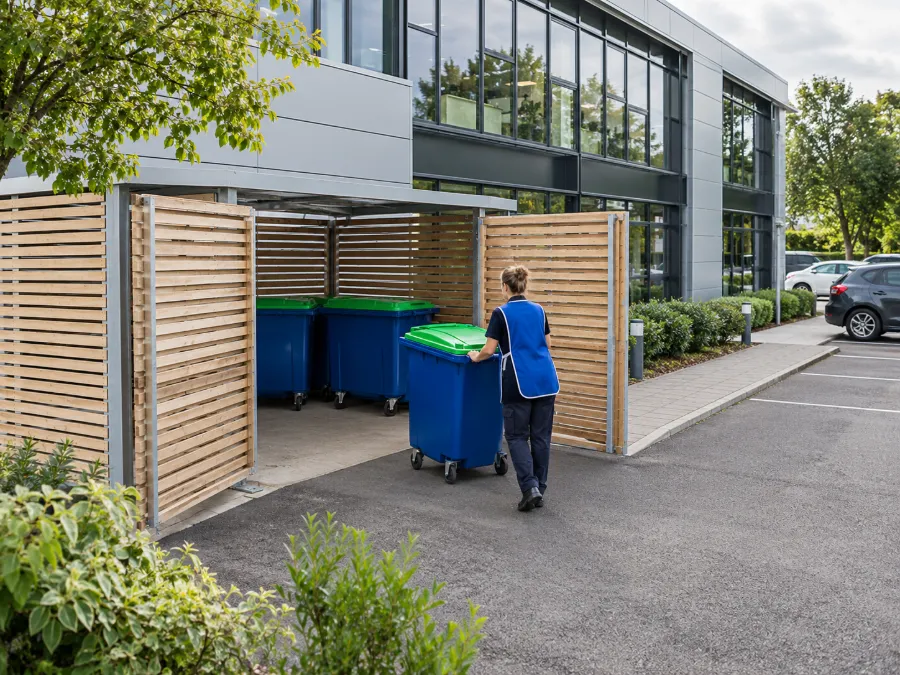
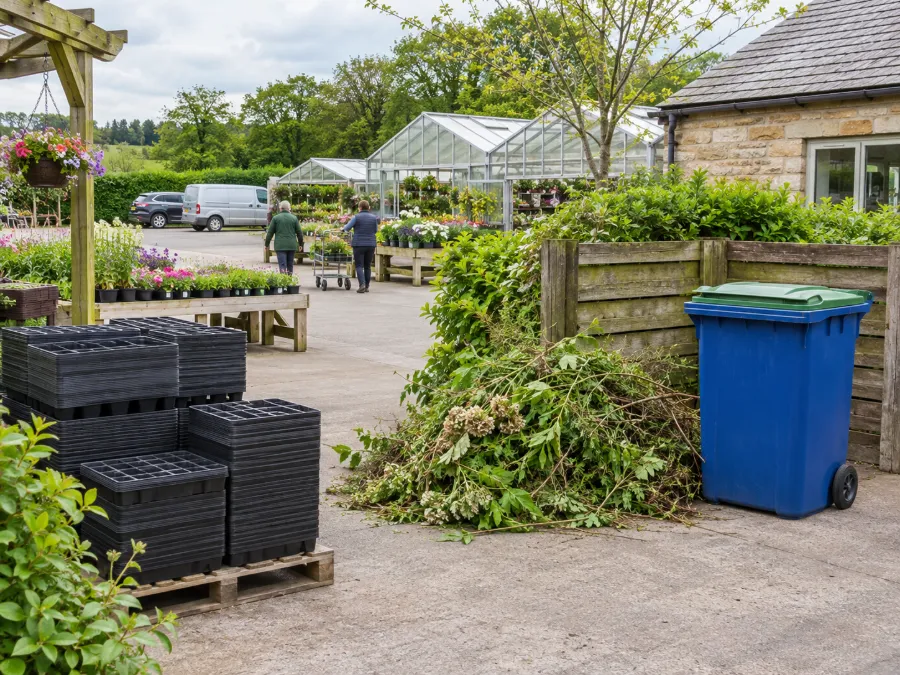
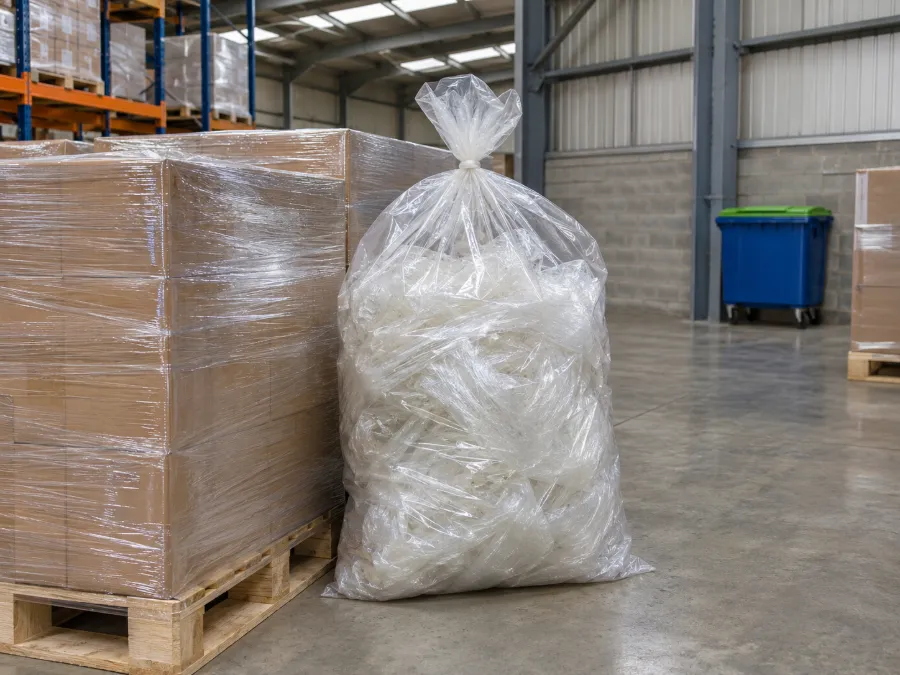
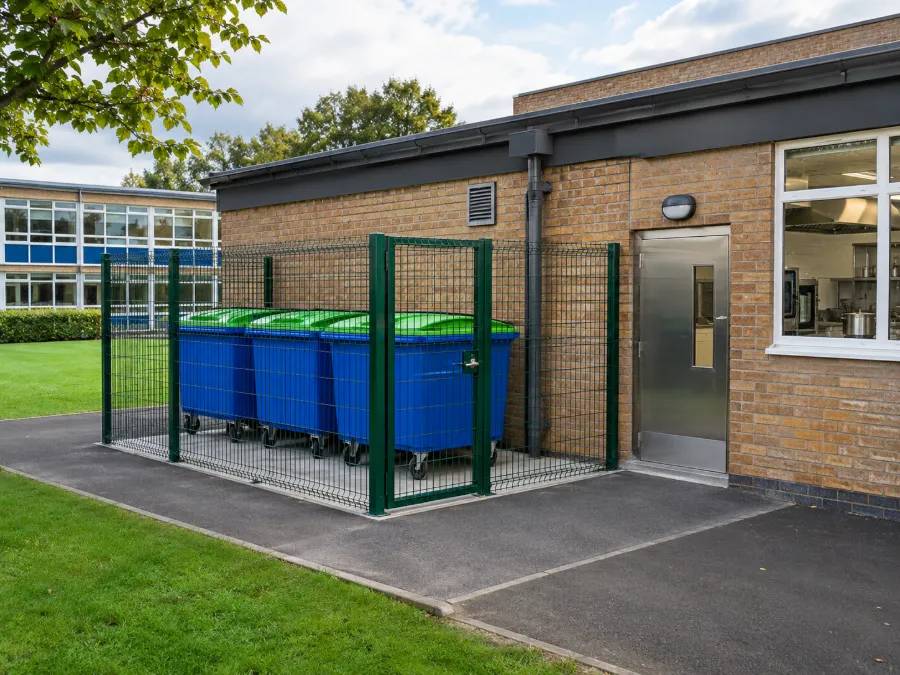
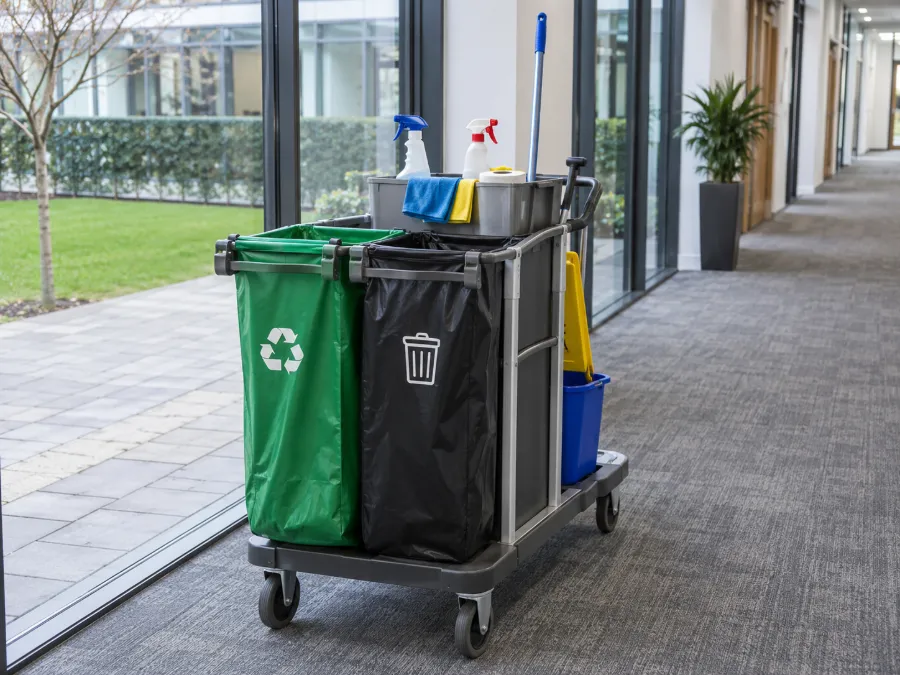
The rules are the same everywhere. How you meet them in a kitchen, a stockroom or a shared bin store is not.
Quick answers
When did Simpler Recycling start for most businesses?
31 March 2025. Qualifying micro-firms have until 31 March 2027.
Is food waste required even in an office?
Yes, once the workplace is in scope, even if only small quantities are produced.
Are paper and card always allowed in mixed recycling?
No. They are normally separate; assessed co-collection may be permitted in defined circumstances.
Is a three-bin system legally required?
No universal three-bin rule applies to every workplace; the right arrangement depends on your waste streams and lawful collection methods.
Do I need a new contract?
Not necessarily. Check whether your existing arrangements already meet the requirements and what changes, if any, are needed.
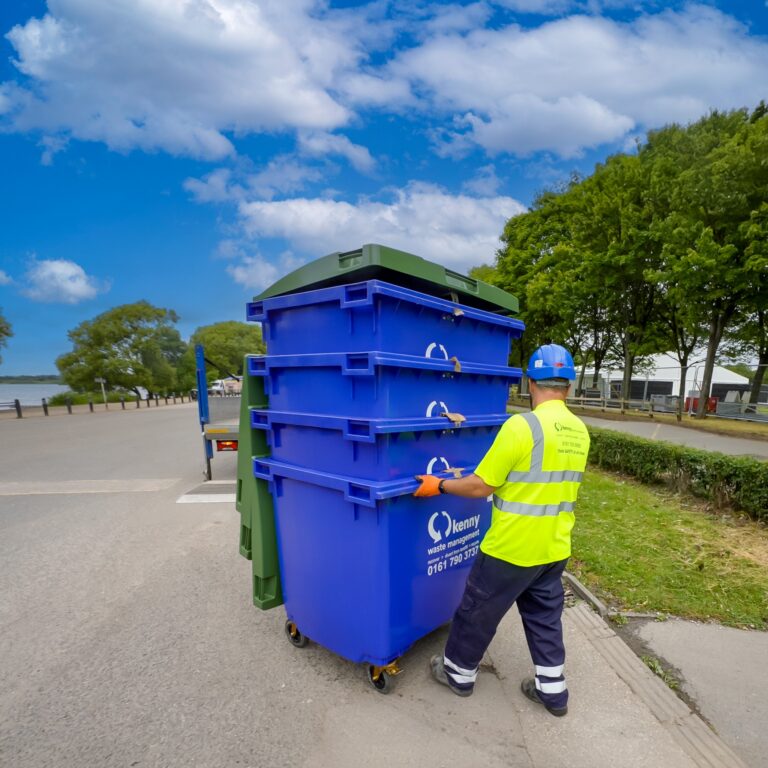
How Kenny Waste Management supports your business
Every business is different. We look at what you produce and set up collections that work for your site, your staff and the rules.
From wheelie bins to FELs, skips, RoRos and compactors:
Containers and collection frequencies matched to each waste stream you need to separate.
Our team keeps track of Defra legislation and Environment Agency guidance, so the advice you get is current.
From looking at how you manage waste now to putting the new arrangements in place.
Consistent scheduled collections, so you can get on with running your business.


What our customers say
-
He was very helpful and polite good job x

Heather Huggins
I have been using this company over a year now in Manchester and hasn’t let me down they also looks after around... Read more
Paul Bradbury
I highly recommend this company for all waste needs, they are second to none.. we were let down by a... Read more
NICOLA Bell
-
They are fairly priced, reliable and have professional and helpful drivers, I highly recommend them.
Nick Lidgett
Great customer service
David Barker
Fantastic service. Prompt delivery and prompt collection. Highly recommend 👌 would most definitely use Kenny waste management again. They did an amazing... Read more
sarah riley
-
Working closely with Daniel Strange has been fantastic, we lacked a lot of communication before this and Daniel has not only helped... Read more
Phil Jackson
Fantastic service sexcellent customer service 👌prompt professional and friendly easy going super quick replies. So helpful.
M N Hussain
Commercial waste disposal skips and waste collection
Jordan Hurst
-
We’ve had a very positive experience working with Kenny Waste. The service has always been reliable, professional and well organised. Wictoria has... Read more
Filip Grufik
A huge thank you to Claire Lawlor and the amazing team for providing such outstanding customer service. Everyone is friendly, professional, and... Read more
Claire Firbank
Straightforward skip hire. Easy to contact over the phone. Delivered the skip next day. I was finished with it early, gave them... Read more
Aoife Mc M
-
I use Kenny Waste for our commercial hazardous waste removal, their facilities team member Wiktoria is main point of contact who... Read more
Lawrence
Great waste management business. Have used them many times. Staff are brilliant.
Marcus Castle
Great service from Kenny Skips! Had two skips delivered recently for home renovations & they’ve been great. Deliver on time, collect on... Read more
Calleigh Turner
-
Excellent service from Kenny Waste Management. I’ve worked with them on a number of skip hire jobs through my business, D Rowsons... Read more
Dan Rowson
Fantastic service and helpful staff on the phone.
David Lloyd
I have used this company for years and never had a problem. Great service as always especially from Grace! Thank you.
H B
How can we help?
Tell us about your premises and the waste you produce. Our commercial waste team will come back with options for your site.
A friendly Account Management Team, not a call centre.
Daily collections across Greater Manchester and the North West.
A family business since 1985, with no hidden costs.
- Tell us about your site
Five quick steps in the form. - We talk it through
Your waste streams, bins and collection days. - You get your quote
Based on the service your site needs.
Prefer to talk? 0161 790 3737


