
Inert Waste and Hardcore Recycling
We help contractors, groundworkers and property teams plan practical removal of inert waste, from a single skip on a refurbishment job to regular exchanges on a larger site.
How can we help?
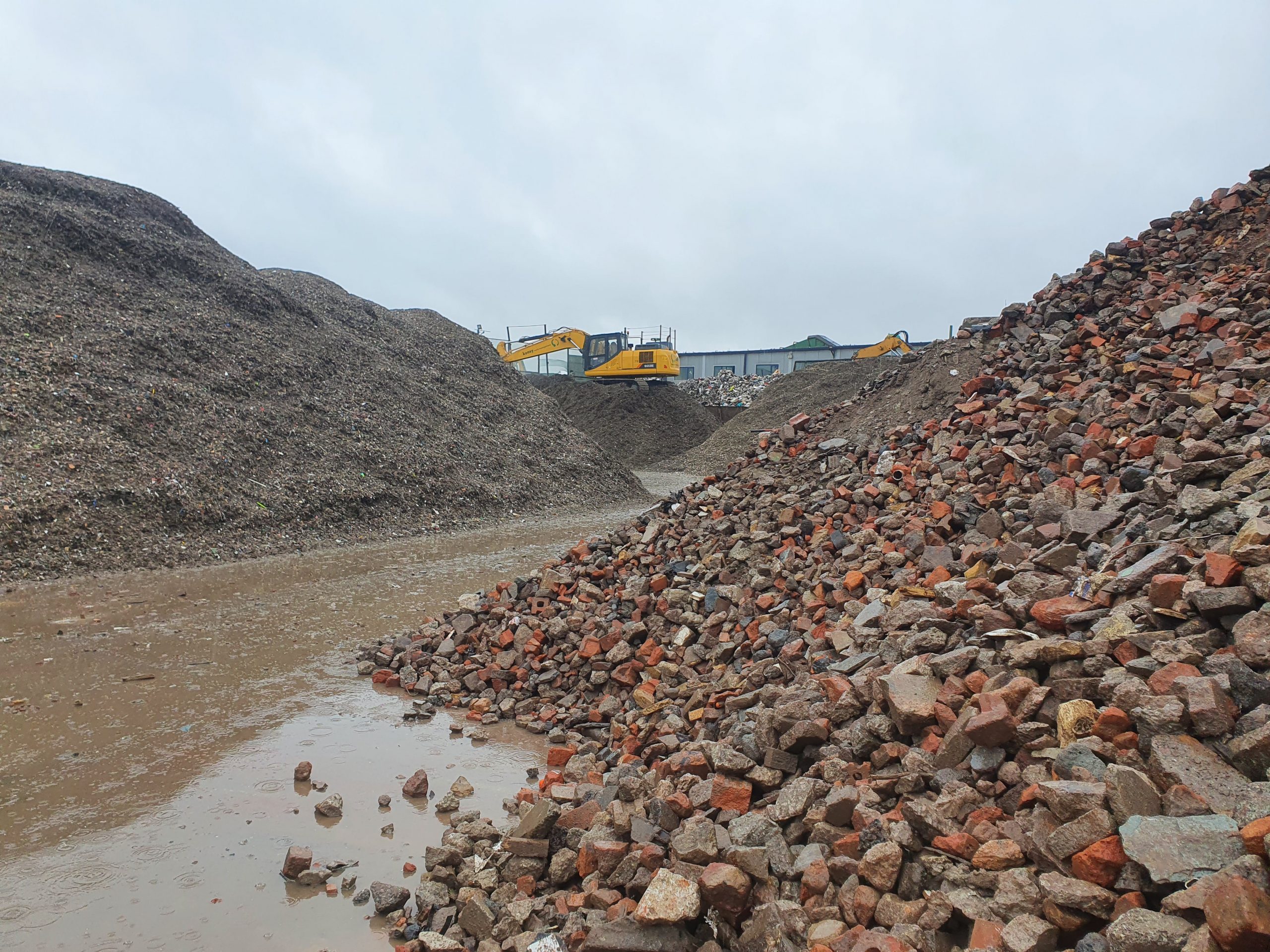
Brick, concrete, stone and rubble are heavy, so the container you choose and what you mix into it can make a real difference to cost and to how much of the material can be recovered. A clean load of hardcore is a useful resource. Contaminated with plasterboard, timber or general rubbish, it can’t be handled the same way.
What counts as inert waste
Inert waste is material that doesn’t break down or react in a way that causes pollution. On most sites that means:
- bricks, blocks and masonry
- concrete, including broken slabs and foundations
- stone, tiles and ceramics
- rubble from groundworks and demolition
Soil and stones can sometimes be handled alongside inert material, but not automatically. Soil from brownfield or previously developed land may need testing before anyone can confirm how it should be classified. Tarmac and asphalt need checking too, because some older surfacing contains coal tar.
How it works
- 1Tell us about the projectThe site postcode, the programme and the waste you expect.
- 2We plan containers and collectionsSized to the waste, the access on site and each phase of the work.
- 3Delivery and exchangesContainers arrive and are exchanged or collected as the work progresses.
Choosing the right container
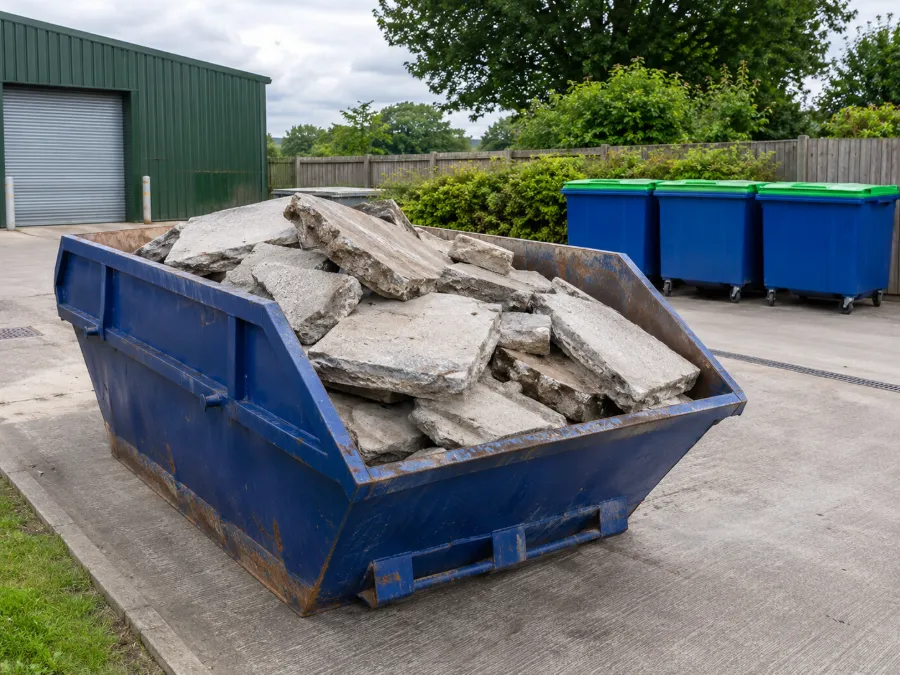
Weight usually matters more than volume with hardcore. A container filled to the brim with concrete can be far heavier than the vehicle or the receiving site allows, so we’ll talk through how much material you expect and how it will be loaded.
Depending on the site, the options might include:
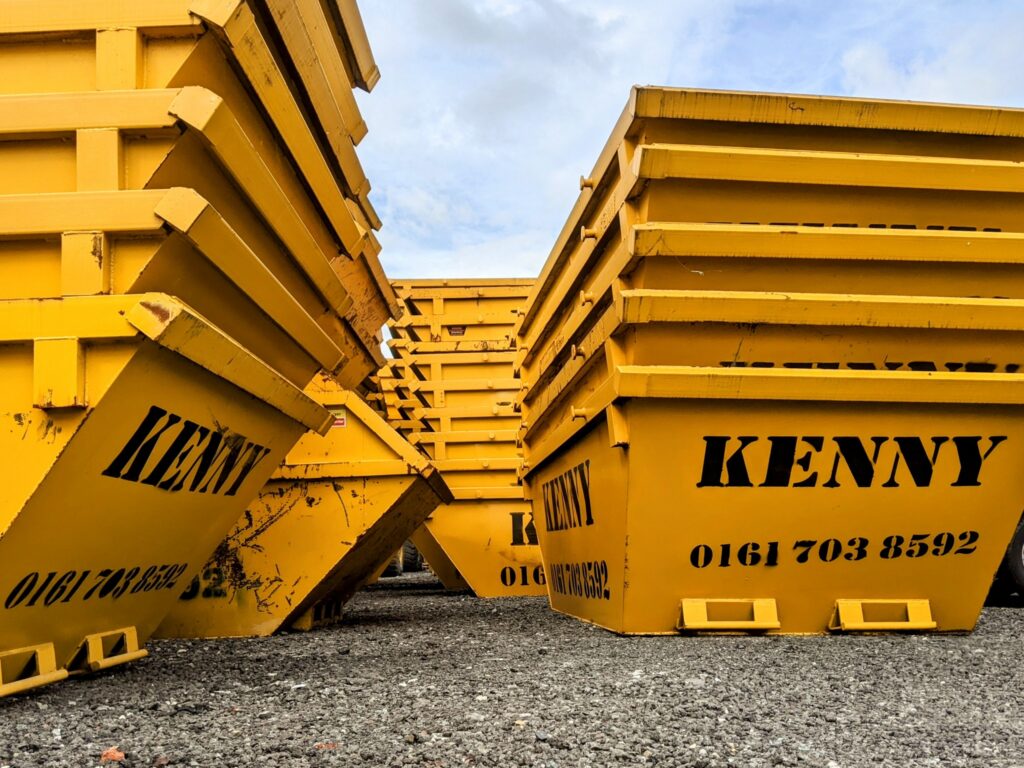
- SkipsFor smaller, steady volumes where space allows a container on site
- Roll-on roll-off (RoRo) containersFor larger projects with suitable vehicle access
- Grab hireWhere loose material is stockpiled and a vehicle can reach it safely
We’ll also ask about access, ground conditions and whether a container needs to sit on the public highway, which normally requires a permit from the local council.
Keeping hardcore clean
Segregation is the single biggest thing a site can do to keep inert waste recoverable. A few simple habits help:
- give hardcore its own container and label it clearly
- keep plasterboard, timber, insulation and packaging out of it
- tell us straight away if you find something unexpected, such as suspected asbestos or contaminated ground
Construction sites are also covered by Simpler Recycling, so cardboard packaging and food waste from site welfare areas should be kept out of construction waste altogether.
Planning waste for your site?
Tell us about the project, the site postcode and the waste you expect, and we’ll plan containers and collections to match.

Simpler Recycling on construction sites
Dry recyclables, such as cardboard packaging and food packaging from welfare areas, must be kept separate from construction waste, and food waste must be separated too. GOV.UK guidance is clear that these materials shouldn’t be mixed or compacted with other construction waste.
In practice this can be simple, for example bagging cardboard for separate collection. We’ll agree a practical approach for your site. Read the official Simpler Recycling guidance on GOV.UK.
Read our Simpler Recycling guide for businesses.
Frequently asked questions
Can I put soil and concrete in the same skip?
Not by default. Clean soil and clean concrete can sometimes travel together, but it depends on where the soil came from and whether it has been tested. Tell us what the load contains and we’ll confirm the right approach before the container arrives.
Why does a mixed load cost more?
A mixed load needs more sorting and some of it may not be recoverable as aggregate. Keeping hardcore separate usually gives the material a better route and keeps handling simpler.
What happens if you find something that shouldn’t be there?
If a load contains materials that weren’t agreed, such as plasterboard or hazardous waste, we’ll contact you to discuss it. It may need to be reclassified, which can affect the charge.
Do I need a permit for a skip?
If the skip will sit on a road or pavement, you’ll normally need a permit from the local council. If it’s on private land, you don’t. We can talk you through what’s needed for your site.
Related services
Accredited and audited




Why businesses choose Kenny
- Family business since 1985, based in Worsley and collecting locally every day
- A dedicated Account Management Team, not a call centre
- Clear contracts with no hidden costs
- Duty of Care paperwork included
- Accredited: CHAS, Constructionline, FORS Silver, SMAS Worksafe and Living Wage Employer
Ready to sort your business waste?

TOTAL WASTE MANAGEMENT
Construction Waste Management






-
He was very helpful and polite good job x

Heather Huggins
I have been using this company over a year now in Manchester and hasn’t let me down they also looks after around... Read more
Paul Bradbury
I highly recommend this company for all waste needs, they are second to none.. we were let down by a... Read more
NICOLA Bell
-
They are fairly priced, reliable and have professional and helpful drivers, I highly recommend them.
Nick Lidgett
Great customer service
David Barker
Fantastic service. Prompt delivery and prompt collection. Highly recommend 👌 would most definitely use Kenny waste management again. They did an amazing... Read more
sarah riley
-
Working closely with Daniel Strange has been fantastic, we lacked a lot of communication before this and Daniel has not only helped... Read more
Phil Jackson
Fantastic service sexcellent customer service 👌prompt professional and friendly easy going super quick replies. So helpful.
M N Hussain
Commercial waste disposal skips and waste collection
Jordan Hurst
-
We’ve had a very positive experience working with Kenny Waste. The service has always been reliable, professional and well organised. Wictoria has... Read more
Filip Grufik
A huge thank you to Claire Lawlor and the amazing team for providing such outstanding customer service. Everyone is friendly, professional, and... Read more
Claire Firbank
Straightforward skip hire. Easy to contact over the phone. Delivered the skip next day. I was finished with it early, gave them... Read more
Aoife Mc M
-
I use Kenny Waste for our commercial hazardous waste removal, their facilities team member Wiktoria is main point of contact who... Read more
Lawrence
Great waste management business. Have used them many times. Staff are brilliant.
Marcus Castle
Great service from Kenny Skips! Had two skips delivered recently for home renovations & they’ve been great. Deliver on time, collect on... Read more
Calleigh Turner
-
Excellent service from Kenny Waste Management. I’ve worked with them on a number of skip hire jobs through my business, D Rowsons... Read more
Dan Rowson
Fantastic service and helpful staff on the phone.
David Lloyd
I have used this company for years and never had a problem. Great service as always especially from Grace! Thank you.
H B


