
Pub and Bar Waste Collections
We help pubs and bars set up reliable collections that suit the premises and the trading pattern.
How can we help?
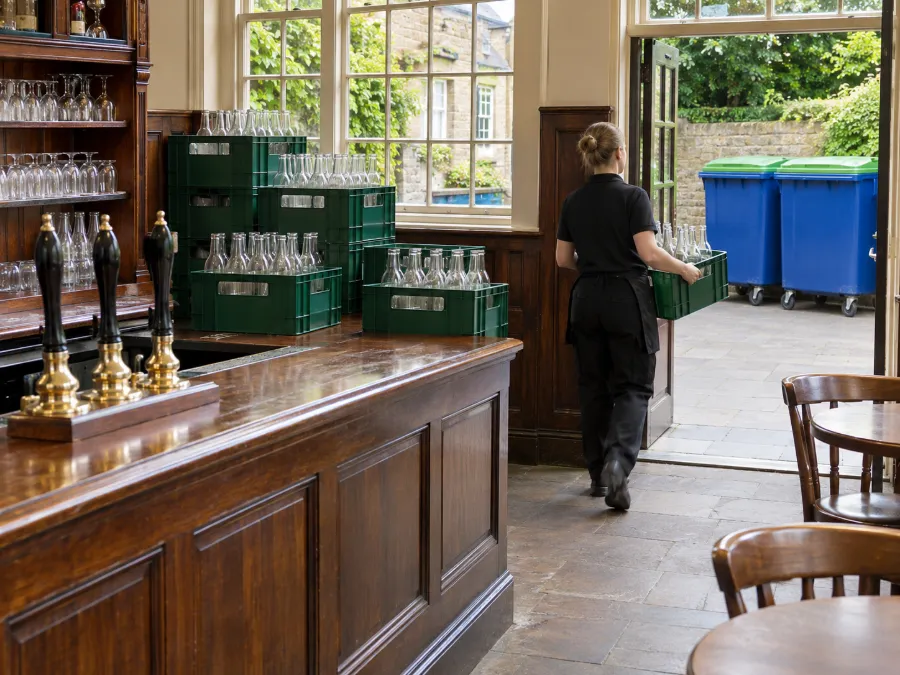
Pubs and bars produce a lot of glass, often in a small yard behind the building. Add cardboard from deliveries, food waste from the kitchen and general waste from busy weekends, and the bin store can fill up quickly.
What pubs and bars typically produce
The main waste streams are:
- glass bottles from beer, wine, spirits and soft drinks
- cans and plastic bottles
- cardboard from deliveries
- food waste from the kitchen and customer plates
- general waste
- used cooking oil, if you run a kitchen
Simpler Recycling requires dry recyclables, food waste and general waste to be separated before collection. That includes waste from customers.
Wheelie bin sizes
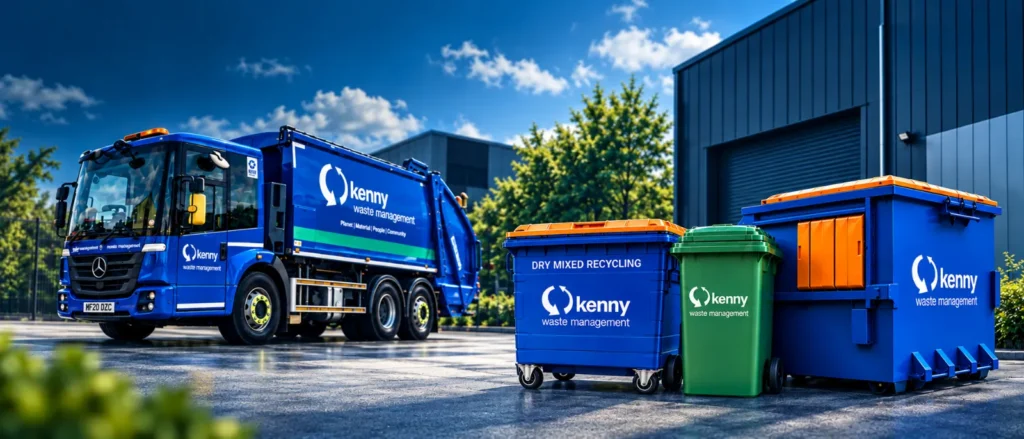
Our wheelie bins come in four sizes. Bag equivalents are a rough guide to how much each one holds, and we’ll help you choose the right mix for your space and volumes.
Producing larger volumes? Ask about our front end loader containers.
How it works
- 1Tell us about your siteWhat you produce, where you are and how often you need collections.
- 2We recommend a set-upContainers, collection days and recycling streams sized to your space and volumes.
- 3Bins arrive, collections startWe deliver your containers, confirm your schedule and stay on hand if anything changes.
Glass: weight, noise and storage
Glass is heavy and noisy to collect. Practical considerations include:
- container size and how far bins need to move on collection day
- collection times that suit neighbours, especially in residential areas
- secure storage, so bins aren’t misused
- how much glass you produce on busy weekends compared with quiet weekdays
Kegs, casks and gas cylinders usually go back to your brewery or supplier rather than into the waste.
Kitchens and cooking oil
If your pub serves food, kitchen waste needs managing too. Food waste should go in sealed containers. Cooking oil should go through a used cooking oil collection if you produce more than small amounts, and never down the drain.
Planning around trading patterns
Pub waste follows the trading week, with big weekends, match days, events and seasonal peaks. We’ll look at:
- your busiest days and the volumes they produce
- delivery times and when the yard is easiest to reach
- whether extra collections may be needed around events and holidays
Keeping the yard tidy
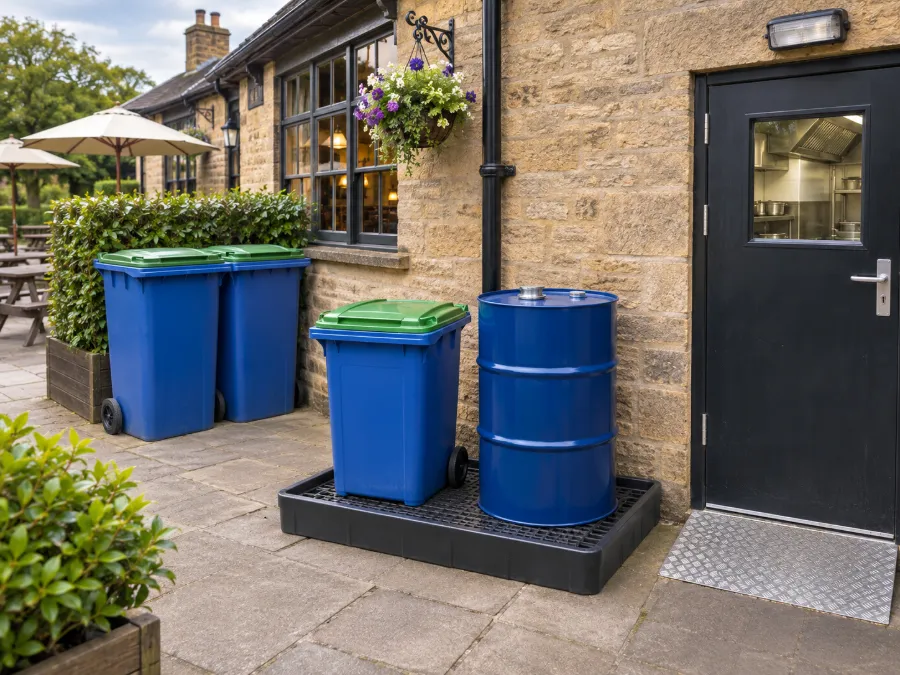
A tidy bin area matters for neighbours, environmental health visits and staff safety. Lids that close, enough capacity for the weekend and broken glass cleared promptly all help. If the yard is shared with other premises, it’s worth agreeing who is responsible for which containers.
Need a waste service for your pub or bar?
Tell us what you produce, where you are and how often you need collections, and we’ll recommend a practical set-up.

Simpler Recycling: what the law requires
You must separate dry recyclables (plastic, metal, glass, paper and card), food waste and general waste before collection. That includes waste from customers and visitors, and food waste must be separated even if you don’t have a kitchen.
We can help you set up containers and collections that fit these rules, but the duty to separate waste stays with your business. Read the official Simpler Recycling guidance on GOV.UK.
Read our Simpler Recycling guide for businesses.
Better waste data
Depending on your account, you can see your services, collection history and waste data online. It helps with internal reporting, audits such as ISO 14001, and spotting ways to reduce waste and cost.
- 24/7 online portal for your account
- Auditable and secure collection records
- A clear dashboard showing what has been collected
Areas we cover
We collect business waste across Greater Manchester and the North West. Find your local area:
Frequently asked questions
Can glass be collected separately?
Yes. We’ll look at your volume and storage space and discuss a suitable glass collection.
Can cooking oil go in the food waste?
Small amounts may go with food waste if your collector allows it. Larger volumes should go through a used cooking oil collection.
What about bottles and cans left by customers?
Customer waste is covered by Simpler Recycling, so it should be separated before collection.
Related sectors
Accredited and audited




Why North West businesses choose Kenny
- Family business since 1985, based in Worsley and collecting locally every day
- A dedicated Account Management Team, not a call centre
- Clear contracts with no hidden costs
- Duty of Care paperwork included
- Accredited: CHAS, Constructionline, FORS Silver, SMAS Worksafe and Living Wage Employer
Ready to sort your business waste?

TOTAL WASTE MANAGEMENT
Business Waste Collections


-
He was very helpful and polite good job x

Heather Huggins
I have been using this company over a year now in Manchester and hasn’t let me down they also looks after around... Read more
Paul Bradbury
I highly recommend this company for all waste needs, they are second to none.. we were let down by a... Read more
NICOLA Bell
-
They are fairly priced, reliable and have professional and helpful drivers, I highly recommend them.
Nick Lidgett
Great customer service
David Barker
Fantastic service. Prompt delivery and prompt collection. Highly recommend 👌 would most definitely use Kenny waste management again. They did an amazing... Read more
sarah riley
-
Working closely with Daniel Strange has been fantastic, we lacked a lot of communication before this and Daniel has not only helped... Read more
Phil Jackson
Fantastic service sexcellent customer service 👌prompt professional and friendly easy going super quick replies. So helpful.
M N Hussain
Commercial waste disposal skips and waste collection
Jordan Hurst
-
We’ve had a very positive experience working with Kenny Waste. The service has always been reliable, professional and well organised. Wictoria has... Read more
Filip Grufik
A huge thank you to Claire Lawlor and the amazing team for providing such outstanding customer service. Everyone is friendly, professional, and... Read more
Claire Firbank
Straightforward skip hire. Easy to contact over the phone. Delivered the skip next day. I was finished with it early, gave them... Read more
Aoife Mc M
-
I use Kenny Waste for our commercial hazardous waste removal, their facilities team member Wiktoria is main point of contact who... Read more
Lawrence
Great waste management business. Have used them many times. Staff are brilliant.
Marcus Castle
Great service from Kenny Skips! Had two skips delivered recently for home renovations & they’ve been great. Deliver on time, collect on... Read more
Calleigh Turner
-
Excellent service from Kenny Waste Management. I’ve worked with them on a number of skip hire jobs through my business, D Rowsons... Read more
Dan Rowson
Fantastic service and helpful staff on the phone.
David Lloyd
I have used this company for years and never had a problem. Great service as always especially from Grace! Thank you.
H B


