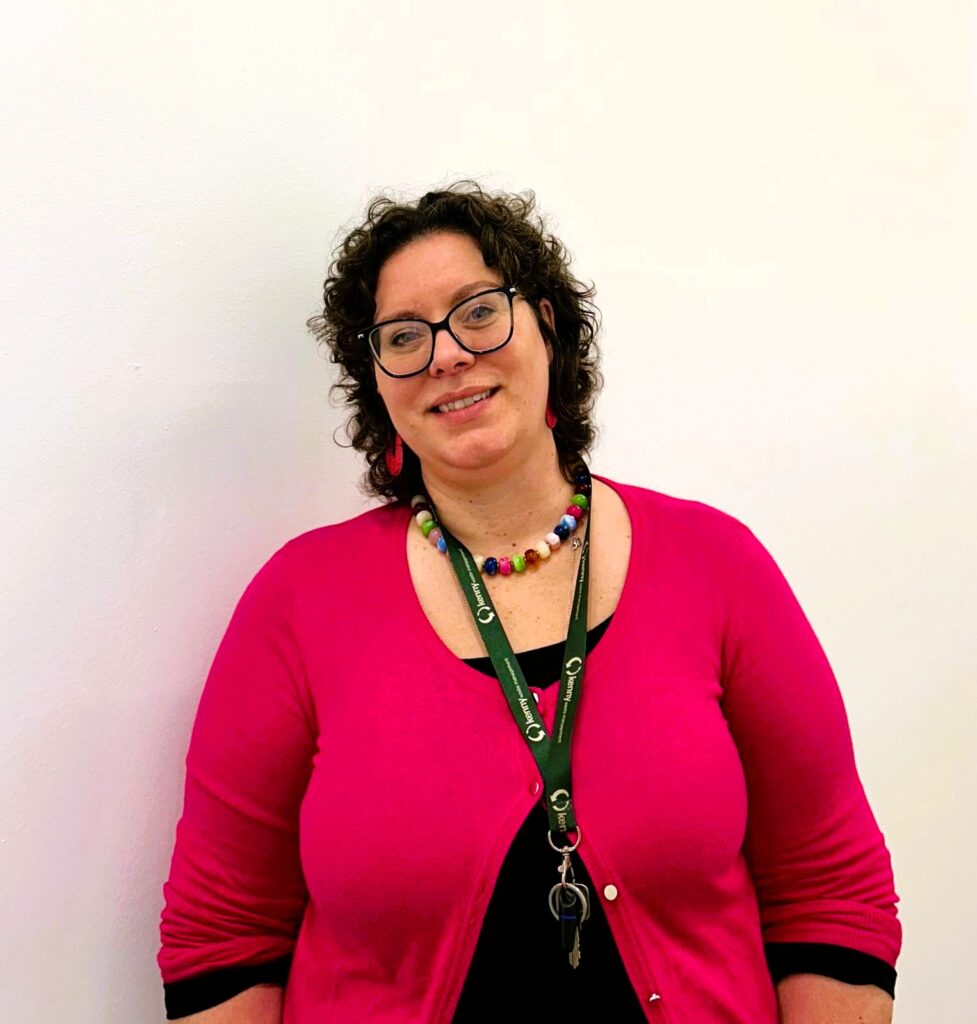
By Inga Augusto
To mark Wear It Pink day, I wanted to share my experience of breast cancer. There are difficult bits, a few tears, some questionable headwear and, eventually, a lot of statement earrings. But there is also a message I hope you’ll take away: check your tatas.
My mum was diagnosed with breast cancer in 2021, so I was already very aware of the importance of checking myself regularly. That’s how, one day in the shower, I found a lump. I booked an appointment with my GP and, from there, everything moved very quickly. A fast-track referral, a scan, a mammogram and then an appointment for the results. I was so convinced it wouldn’t be anything serious that I went to that appointment on my own.
What were the odds? I was young. I had breastfed both my daughters (I’d always read that worked in your favour. I felt a little cheated!). I had never smoked or drunk alcohol. In my head, I had put together a very convincing case for why this couldn’t possibly be cancer.
Unfortunately, my body had not read my argument.
I was called into a room with two nurses and a consultant, who said: “I’m afraid it’s not good news. You have an invasive ductal carcinoma, which is a type of breast cancer.” And that was where my ability to take in information stopped. They kept talking, but I was frozen. I could hear words without really understanding them. Then someone asked, “Do you have anybody with you today?”
“No, but I need to tell my husband.”
That was when the tears came.
“I need to tell my daughters.”
Everything else is a blur.
Then came the part where you have to say it out loud to the people you love, while you are still trying to understand it and accept it yourself. There were endless appointments and tests, surgery, and then a long wait to find out whether I would need chemotherapy.
Eventually, the same consultant who had given me the original diagnosis confirmed that I would need chemotherapy, followed by radiotherapy. I knew it would be hard. My approach was to try, wherever I could, not to make an already difficult experience any harder for myself. I couldn’t control everything that was happening, but I could make some decisions along the way. I tried cold capping to save my hair. It didn’t work for me, and after the first cycle I decided I didn’t want to keep holding on to an expectation that was becoming more upsetting than helpful.
So I shaved my head.
It hurt less emotionally than I thought it would. There was something practical about making the decision myself. Wigs, I quickly discovered, were not for me. They made me feel more self-conscious. Did it look right? What if it moved? And why did it feel so strange on my head? I already had enough going on without adding a daily wig security assessment. I decided I would rock stylish scarves instead. And I did.
Chemotherapy was hard. Hard on my body, hard emotionally, and hard on the people around me. My family were going through it too. They had their own fears while trying to help me through mine. We got through it together, one appointment, one treatment and one day at a time.
Work also played an important part in getting me through treatment. Having the flexibility to work from home while my immune system was particularly vulnerable meant I could stay involved and help as much as I felt able to.
It gave me something else to focus on, a bit of normality, and the feeling that I could still contribute when so much else felt out of my control. I was still me, with things to do and problems to solve. I’m very grateful for the flexibility and support that made that possible.
What I hadn’t fully anticipated was how much there would still be to deal with after chemotherapy and radiotherapy finished. I was weaker and more fragile than I had ever been. Going back to work meant facing people while I was still getting used to myself: no hair, no lashes, no brows, extra weight on a body I already had complicated feelings about, and what I affectionately described as “one and a half boobs”.
There was a lot to accept.
But I kept showing up as best I could, with my statement earrings and as many colours as I could possibly wear. The hair might have been missing, but I still had accessories and opinions. My energy took time to return. If I’m honest, it still hasn’t reached its previous levels. I get tired more quickly, and I’m still learning how much I can ask of myself.
My treatment also continues. My treatment plan stretches over the next ten years, with its own challenges and side effects. That can feel daunting, but it means I am taking the treatment recommended to help reduce the chance of the cancer coming back.
So, what would I like you to take from all this?
Please check your tatas.
Get to know what is normal for you. If you notice a new lump or another unusual change, speak to your GP. You don’t need to know what it is before asking someone to check it.
I’m very glad I made that appointment, even while confidently telling myself it was probably nothing. I had a treatment plan and a way forward. It wasn’t easy, and I’m still dealing with parts of it. But here I am: as loud as ever, getting tired a lot quicker, wearing the earrings and finding my feet again.
There’s a Portuguese saying: “Não há bem que sempre dure, nem mal que nunca acabe.”
Roughly translated: “No good thing lasts forever, and no hardship lasts forever either.”
During the hardest parts, it helped me remember that how I felt that day wouldn’t necessarily be how I felt every day. There are still difficult days. But there is also work, family, laughter, colour and life.
And I’m very glad to be here for all of it.