The short answer
30-second summary- Offices need a separate food waste collection, even without a canteen.
- Check how your collector handles paper and card, especially if it all goes in one mixed bin today.
- In a shared building, agree who is responsible for what.
The main challenge is often not volume; it is making separation consistent across floors, tenants and cleaning teams.
Start in the kitchen
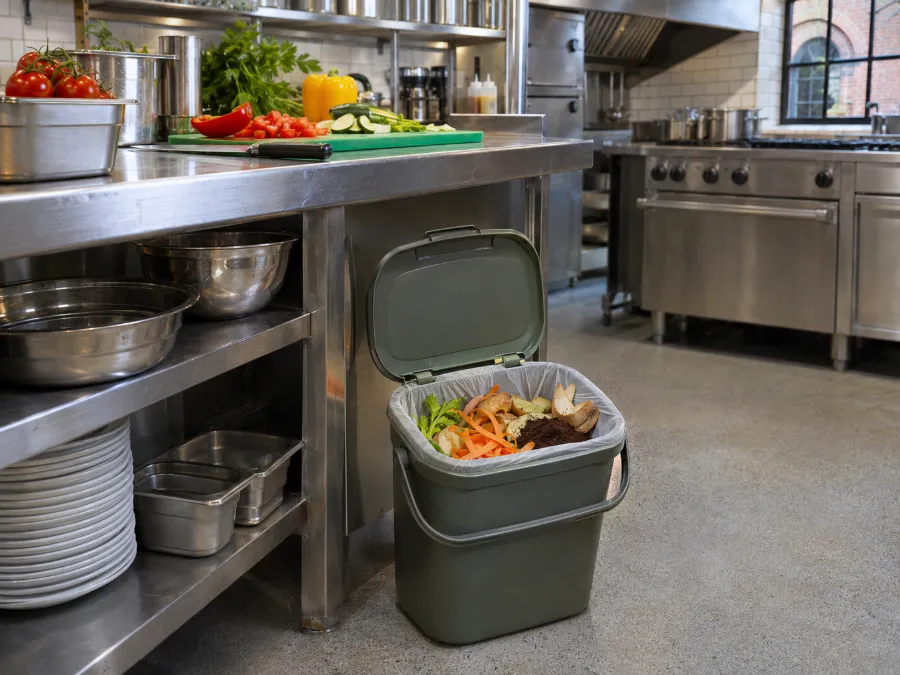
Staff lunches and hot drinks generate food waste even where no meals are sold. Put a clearly labelled food waste caddy near preparation and washing-up areas and agree who empties it into the external collection container.
Paper, card and packaging
Printers, deliveries and stationery create paper and cardboard. Confirm the correct arrangement with your waste collector, especially if paper and card currently go into an all-purpose mixed recycling bin. Flatten cardboard only where the collection service instructs you to do so.
Shared buildings need clear ownership
For multi-tenant buildings, building management should communicate one consistent system rather than leaving each tenant to guess. Confirm:
A sensible office rollout
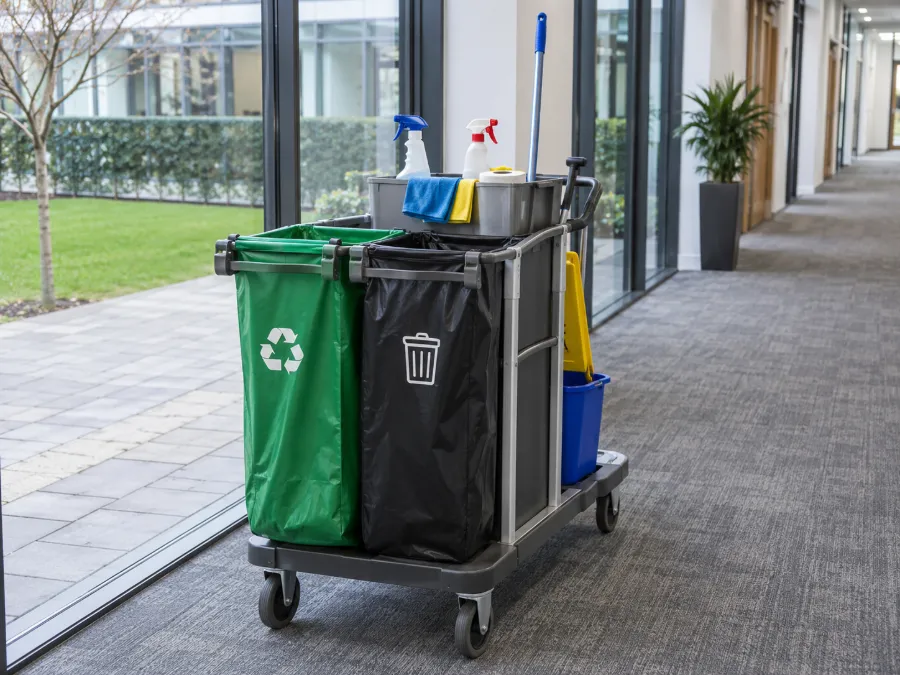
- Audit the current waste points.
- Rationalise bins where possible.
- Brief cleaning staff.
- Introduce clear signs.
- Check results after the first month.
Simple placement decisions often have more impact than lengthy staff emails.
Frequently asked questions
Do offices need food waste bins without a canteen?
Yes, workplaces within scope must arrange separate food waste collection even if the only food waste comes from staff.
Who is responsible in a serviced office?
Responsibilities depend on the arrangement. Landlords, facilities managers, occupiers and collectors should establish clear roles; the rules do not disappear because collections are shared.
Can staff use the same bins as visitors?
Yes, provided the waste is separated appropriately before collection and the bins are clearly managed.
This guide is general information for businesses in England. It is not legal advice.