The short answer
30-second summary- Hospitality workplaces in scope must separate food waste.
- Keep packaging out of the food waste, including compostable packaging.
- High volumes of glass or cardboard may be easier to manage with dedicated collections.
A successful Simpler Recycling arrangement has to work during a busy service, not just when the premises are quiet.
Design around where waste is produced
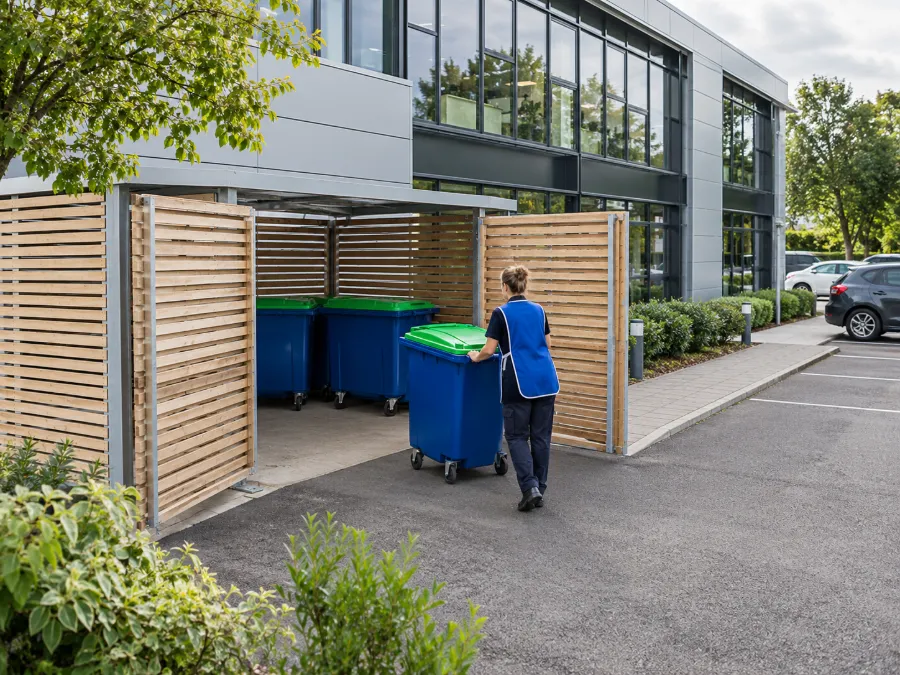
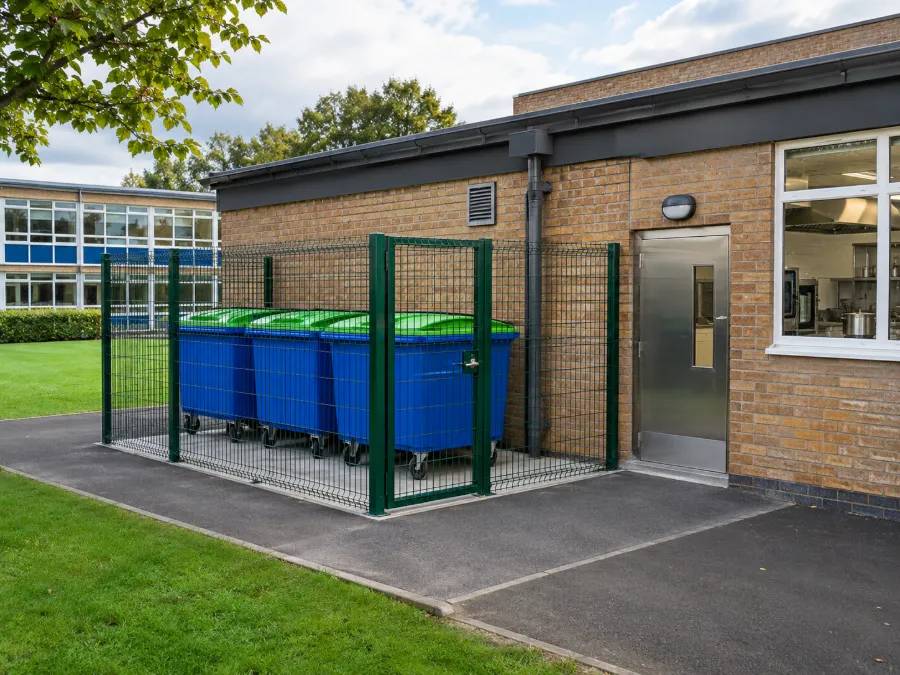
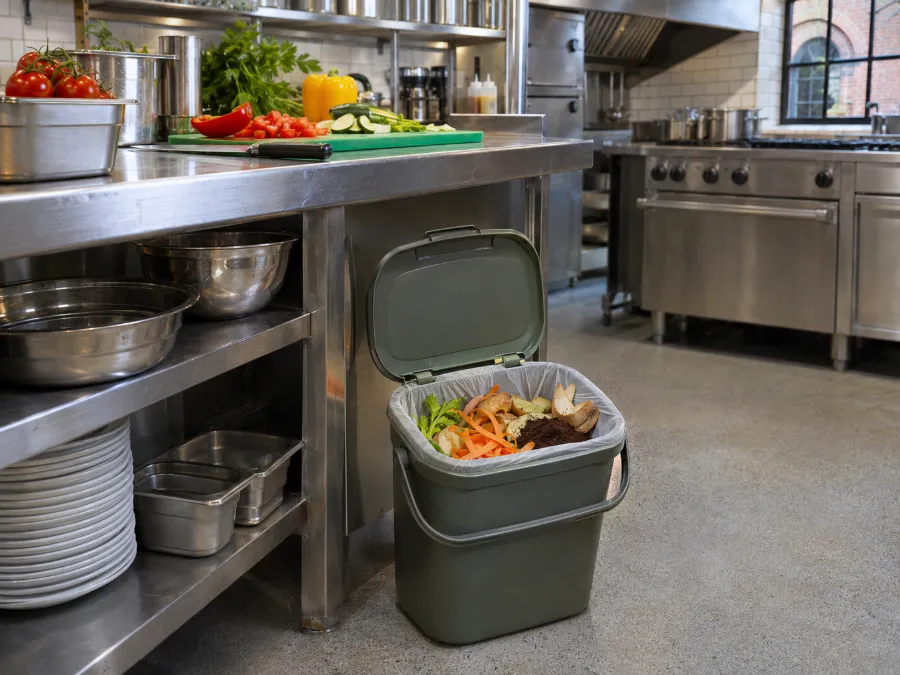
Separate food waste at preparation, plating and clearing points. Provide appropriately positioned containers for glass, packaging and residual waste. Ensure the outside bin store can accommodate peak volumes without obstructing staff or deliveries.
Keep food waste and packaging apart
Scraped plate waste belongs in the food waste system, while packaging should be sorted according to the collector’s accepted-materials list. Keep compostable packaging out of the food waste; government guidance excludes it. Used cooking oil may need a separate specialist arrangement.
Glass and cardboard deserve attention
A pub or restaurant producing substantial glass may find dedicated glass collections easier to manage than relying on a mixed stream. Deliveries can create significant cardboard volumes, making a dedicated paper/card solution operationally sensible.
Train for the busiest shift
Brief kitchen, bar, front-of-house and cleaning teams on the same rules. Use short signs with familiar examples. Review contamination and collection frequency after the first busy weekend.
Frequently asked questions
Do restaurants need separate food waste collections?
Yes, in-scope hospitality workplaces must separate food waste.
Can food waste include meat and dairy?
These are typical food waste materials, subject to your collector’s accepted-materials guidance.
Is a dedicated glass bin compulsory for every pub?
Not universally. Glass can be co-collected with certain dry recyclables, but a separate glass collection may suit high-volume sites.
This guide is general information for businesses in England. It is not legal advice.